
The Future of BIM: AI, Automation, and Connected Construction
The Future of BIM: AI, Automation, and Connected Construction
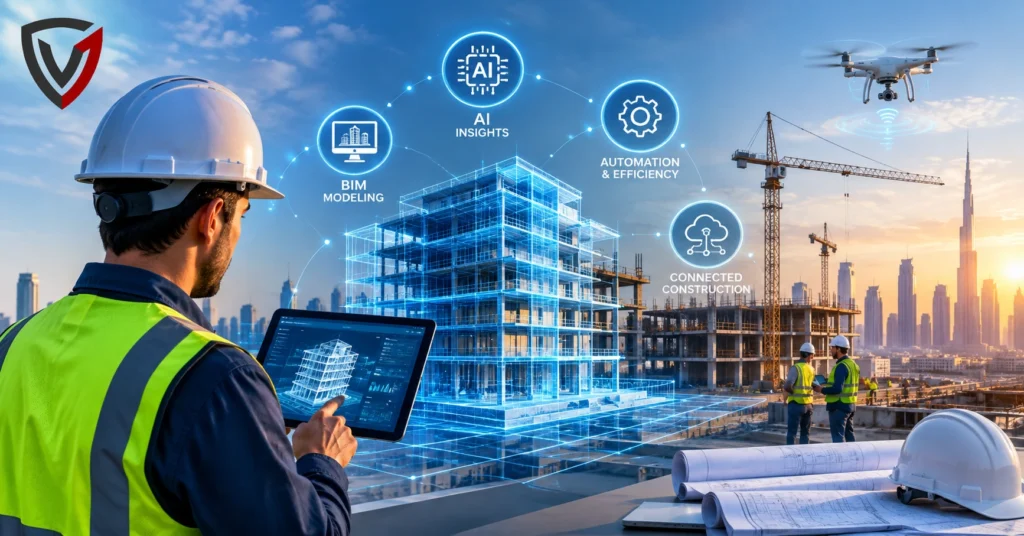
The future of BIM is moving far beyond 3D modeling. Building Information Modeling is becoming part of a connected digital construction ecosystem where artificial intelligence, automation, cloud platforms, IoT devices, robotics, and digital twins work together to improve how buildings and infrastructure are designed, constructed, operated, and maintained.
Modern BIM technology can connect project information across the entire building lifecycle. When accurate models are combined with real-time construction data and intelligent analysis, architects, engineers, contractors, and facility managers can make more informed decisions, identify potential problems earlier, and manage complex projects more efficiently.
This transformation does not mean that technology will replace construction professionals. Instead, the growing use of AI in BIM and BIM automation is expected to reduce repetitive work while allowing professionals to focus more on design decisions, coordination, problem-solving, quality, and project management.
How BIM Has Evolved
Traditional computer-aided design primarily focused on producing digital drawings. BIM introduced a broader approach by combining 3D geometry with information about building components, materials, specifications, quantities, and relationships between different elements.
Today, BIM can support much more than 3D BIM modeling. 4D BIM connects models with schedules, while 5D BIM adds cost information for better construction cost management. BIM coordination can also help teams identify conflicts between architectural, structural, and MEP systems before they become expensive problems on site.
Modern BIM services increasingly connect design information with construction project management, procurement, facility management, and building lifecycle management. This evolution is creating the foundation for data-driven construction and connected construction environments.
AI in BIM: Making Models More Intelligent
Artificial intelligence in BIM can help professionals analyze large amounts of project information much faster than traditional manual processes. AI-powered BIM systems can identify patterns, compare design alternatives, detect potential risks, and support decision-making based on available project data.
AI-Powered Design Analysis
AI can evaluate building layouts against multiple requirements, including space utilization, energy performance, material requirements, cost, and constructability. Instead of reviewing every option manually, professionals can use intelligent tools to identify alternatives that deserve closer consideration.
Machine learning in construction can also become more useful as organizations collect historical project data. Previous schedules, costs, defects, delays, and resource information can provide valuable patterns for future planning, provided that the underlying data is accurate and relevant.
Predictive Analytics for Construction
Predictive analytics can help construction teams identify conditions that may contribute to schedule delays, cost increases, quality issues, or resource shortages. For example, an AI system could analyze historical project information and current progress data to highlight activities that require additional attention.
These systems should be treated as decision-support tools rather than replacements for professional judgment. Their usefulness depends heavily on data quality, project context, and how the technology is integrated into existing workflows.
AI-Assisted Clash Detection
Clash detection is already an important part of BIM coordination. Future AI-assisted clash detection can go further by helping teams prioritize conflicts according to severity, construction sequence, location, and potential project impact.
Instead of simply producing a long list of clashes, intelligent BIM tools may help coordinators focus first on conflicts that could create significant rework, delays, or safety concerns.
Generative Design and Intelligent BIM Models
Generative design is another important development in the future of BIM. Rather than creating a single design and manually adjusting it repeatedly, professionals can define objectives and constraints and allow software to generate multiple possible solutions.
For example, a generative design workflow could consider floor area, structural requirements, circulation, daylight, energy efficiency, material usage, and project cost. Designers can then compare alternatives and select an appropriate solution based on project requirements.
The value of generative design is not simply the number of options it creates. Its real potential comes from helping professionals explore design possibilities that may be difficult or time-consuming to evaluate manually.
BIM Automation Will Reduce Repetitive Work
BIM automation is expected to become one of the most practical areas of digital construction. Many BIM workflows involve repetitive activities such as checking models, extracting information, producing schedules, updating documentation, and preparing quantity information.
Automated workflows can handle structured and repeatable tasks while professionals review the results and make decisions where expertise is required.
Key BIM Automation Applications
- Automated model checking and validation
- Automated quantity takeoffs
- Automated clash detection
- Automated documentation and drawing updates
- Data extraction from BIM models
- Model validation against project standards
- Automated reporting and project information management
- Workflow automation between BIM platforms and other construction systems
Automated quantity takeoff, for instance, can extract quantities directly from model information. When the model is properly structured, changes to design elements can also be reflected more efficiently in related project information.
Cloud-Based BIM and Real-Time Collaboration
Cloud-based BIM is changing how project teams access and share information. Instead of relying only on files stored on individual computers, teams can work through centralized platforms and Common Data Environments (CDEs).
A CDE can provide a structured environment for storing, sharing, reviewing, and managing project information. Architects, engineers, contractors, consultants, and clients can access relevant information according to their responsibilities and permissions.
Cloud collaboration also supports remote project teams. Real-time collaboration, version control, centralized project data, and controlled access can reduce confusion caused by outdated files and disconnected information.
Connected Construction: Linking BIM With Real-Time Data
The next stage of BIM involves connecting digital models with information generated from the physical construction environment. This is where BIM begins to interact with IoT devices, smart sensors, mobile applications, drones, equipment, and other construction technology.
IoT in construction can provide real-time information about equipment, environmental conditions, materials, and site activities. When this information is connected with BIM data, teams can gain a more current understanding of what is happening on a project.
Examples of Connected Construction
- Tracking construction equipment and machinery
- Monitoring worker safety conditions
- Tracking materials through different project stages
- Monitoring temperature, humidity, dust, and other environmental conditions
- Comparing planned and actual construction progress
- Monitoring equipment performance and maintenance requirements
For example, smart sensors can monitor equipment operating conditions and send information to a connected platform. This data can support maintenance planning and help project teams identify potential equipment problems before they cause unexpected disruption.
Digital Twins: Connecting BIM With Building Operations
Digital twin technology represents an important step in the evolution of BIM. A BIM model generally represents information about a building or infrastructure asset, while a digital twin can connect that digital representation with data from the physical asset during operation.
A construction digital twin can combine BIM information with sensors, building management systems, maintenance records, and operational data. This creates a more dynamic source of information for managing assets throughout their lifecycle.
Applications of Digital Twins
- Building monitoring
- Predictive maintenance
- Energy management
- Facility management
- Asset management
- Building performance optimization
For facility managers, this can make building lifecycle management more data-driven. Instead of relying only on static documentation, teams can potentially access current information about equipment, spaces, systems, and operational performance.
Robotics, Drones, and Construction Automation
Construction automation will increasingly connect BIM information with physical construction activities. Robotics, drones, automated surveying equipment, and digitally controlled machinery can use project information to support activities that are repetitive, hazardous, or highly measurement-dependent.
Drones can support site inspection, surveying, and progress monitoring. Drone-captured information can be compared with BIM models to help teams understand differences between planned and actual site conditions.
Construction robotics may also support activities such as repetitive installation, material handling, surveying, and prefabrication. In modular construction, accurate BIM data can help coordinate components before they reach the construction site.
How AI and Automation Can Improve Construction Projects
The potential benefits of intelligent construction technologies are closely connected to how effectively they are implemented. When reliable information and suitable workflows are in place, BIM, AI, and automation can support several areas of project delivery.
- Reduced design errors: Automated checks can identify certain issues earlier in the workflow.
- Better coordination: Shared models and centralized information can improve communication between disciplines.
- Improved scheduling: 4D BIM and predictive analytics can support construction planning.
- Better cost control: 5D BIM and automated quantity information can support cost management.
- Faster decision-making: Real-time project information can reduce dependence on outdated data.
- Improved quality: Digital inspection and model-based workflows can support quality control.
- Reduced rework: Early identification of coordination issues can reduce certain avoidable site problems.
- Resource optimization: Better information can help teams plan materials, equipment, and labor.
- Improved safety: Connected sensors and digital monitoring can support safety management.
These benefits are not automatic. Results depend on implementation quality, data accuracy, software capabilities, team skills, project complexity, and the consistency of the underlying BIM workflow.
BIM and Sustainable Construction
The future of BIM is also closely connected with sustainable building design and construction. Digital models can help teams analyze energy use, material quantities, building performance, and other factors that influence environmental impact.
AI can potentially compare design alternatives based on energy efficiency, material optimization, and other sustainability objectives. BIM data can also support lifecycle assessment and help project teams consider environmental impacts earlier in the design process.
During construction, better material planning can contribute to waste reduction. During operation, connected building systems can provide information that supports energy management and performance optimization.
As organizations place greater emphasis on carbon reduction and resource efficiency, BIM can become an important foundation for sustainable construction planning.
Challenges Facing the Future of BIM
Although the potential of AI, automation, and connected construction is significant, adoption also creates practical challenges. Construction companies need to consider technology, people, processes, data, and security together rather than treating BIM as simply a software purchase.
Data Quality and Interoperability
AI systems and automated workflows depend on reliable information. Inaccurate, incomplete, inconsistent, or poorly structured BIM data can reduce the value of automation and produce unreliable results.
BIM interoperability is another important issue. Different software platforms may use different formats and workflows. Open BIM approaches, IFC, and BIM interoperability standards can help improve information exchange, but organizations still need appropriate processes for managing data across systems.
Cybersecurity and Data Privacy
As BIM platforms become increasingly connected to cloud systems, IoT devices, mobile applications, and building management systems, cybersecurity becomes more important. Construction companies need appropriate access controls, security policies, backups, and information management practices.
Cost, Training, and Skills
Implementing advanced BIM solutions can require investment in software, infrastructure, training, and workflow development. Employees also need time to learn new technologies and understand how they fit into established construction processes.
Resistance to technological change can slow adoption, particularly when teams do not clearly understand the practical value of new systems. Successful implementation therefore requires both technical planning and organizational support.
Skills BIM Professionals Will Need
As BIM becomes more intelligent and connected, professionals will need a combination of construction knowledge and digital skills. Traditional BIM modeling remains important, but future workflows are likely to require broader capabilities.
- BIM modeling and BIM coordination
- Construction data management
- AI and intelligent BIM tools
- BIM automation and scripting
- Computational and generative design
- Digital twin technology
- Cloud collaboration
- Data analysis and visualization
- Construction technology and digital workflows
Professionals who understand both construction processes and digital information workflows can play an important role in connecting technology with practical project requirements.
What Will the Future of BIM Look Like?
Over the coming years, BIM is likely to become increasingly automated, intelligent, connected, collaborative, and data-driven. Instead of treating the BIM model as a static project deliverable, organizations may increasingly use it as a central source of information that connects design, construction, operations, and maintenance.
AI may assist with design analysis, risk identification, documentation, scheduling, and cost forecasting. Automation may reduce repetitive BIM tasks, while IoT and connected systems can provide real-time information from construction sites and operating buildings.
Digital twins may further extend BIM into facility management, while robotics and automated equipment could connect digital project information directly with physical construction activities.
The organizations that benefit most from these developments will not necessarily be those that adopt every new technology. Instead, successful digital transformation will depend on selecting appropriate tools, maintaining reliable data, developing skilled teams, and integrating technology into practical construction workflows.
Frequently Asked Questions
1. What is the future of BIM?
The future of BIM involves greater integration with AI, automation, cloud collaboration, IoT, digital twins, robotics, and real-time construction data. BIM is expected to become a broader digital platform for managing information throughout the building lifecycle.
2. How will AI change BIM?
AI can help analyze BIM data, identify potential design and coordination issues, evaluate alternatives, support scheduling and cost forecasting, and automate repetitive tasks. Its effectiveness depends on accurate project information and appropriate human oversight.
3. What is BIM automation?
BIM automation uses software, scripts, and intelligent workflows to perform repetitive activities such as model checking, quantity extraction, clash detection, documentation, and data processing with less manual effort.
4. How are digital twins different from BIM?
BIM primarily provides structured digital information about a building or asset, while a digital twin can connect that digital representation with real-time information from the physical asset. Digital twins are particularly useful for monitoring, maintenance, operations, and performance optimization.
5. How does IoT support connected construction?
IoT devices and smart sensors can collect real-time information about equipment, materials, environmental conditions, worker safety, and site progress. Connecting this information with BIM environments can provide project teams with a more current view of construction activities.
6. Will AI replace BIM professionals?
AI is more likely to change the responsibilities of BIM professionals than simply eliminate them. Automation can handle repetitive tasks, while professionals remain important for design decisions, coordination, construction knowledge, quality control, validation, and project-specific judgment.
7. What challenges can companies face when adopting advanced BIM technology?
Common challenges include data quality, software compatibility, interoperability, cybersecurity, implementation costs, training requirements, organizational resistance, and a shortage of professionals with appropriate digital construction skills.
8. How can BIM support sustainable construction?
BIM can support energy analysis, material optimization, waste reduction, carbon analysis, lifecycle assessment, and building performance evaluation. When combined with AI and real-time data, it can provide additional information for sustainable design and operational decisions.